







Mac Waste Group Australia Visits WTEYA on Wastewater
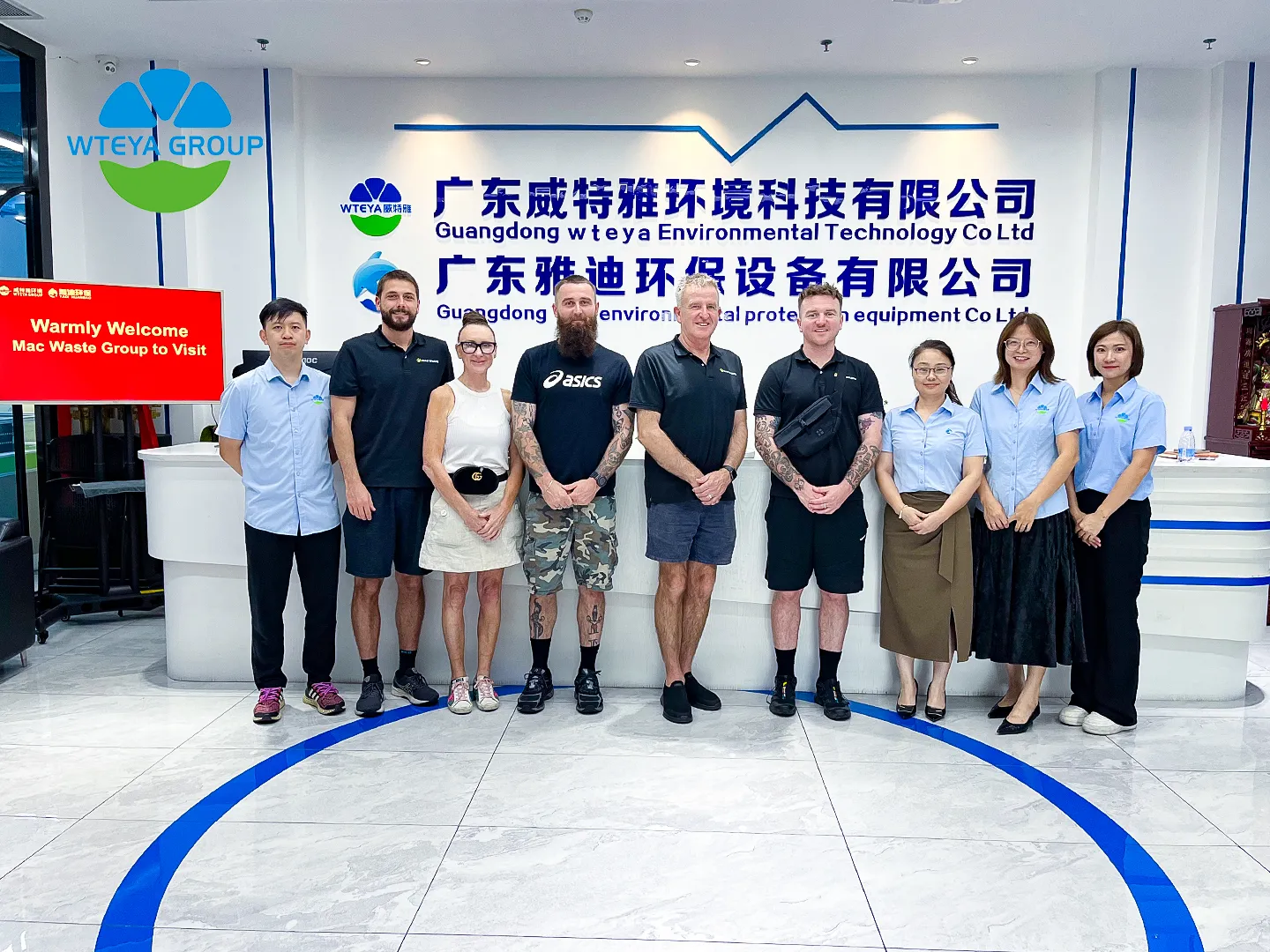
Mac Waste Group Australia Visits WTEYA on Wastewater
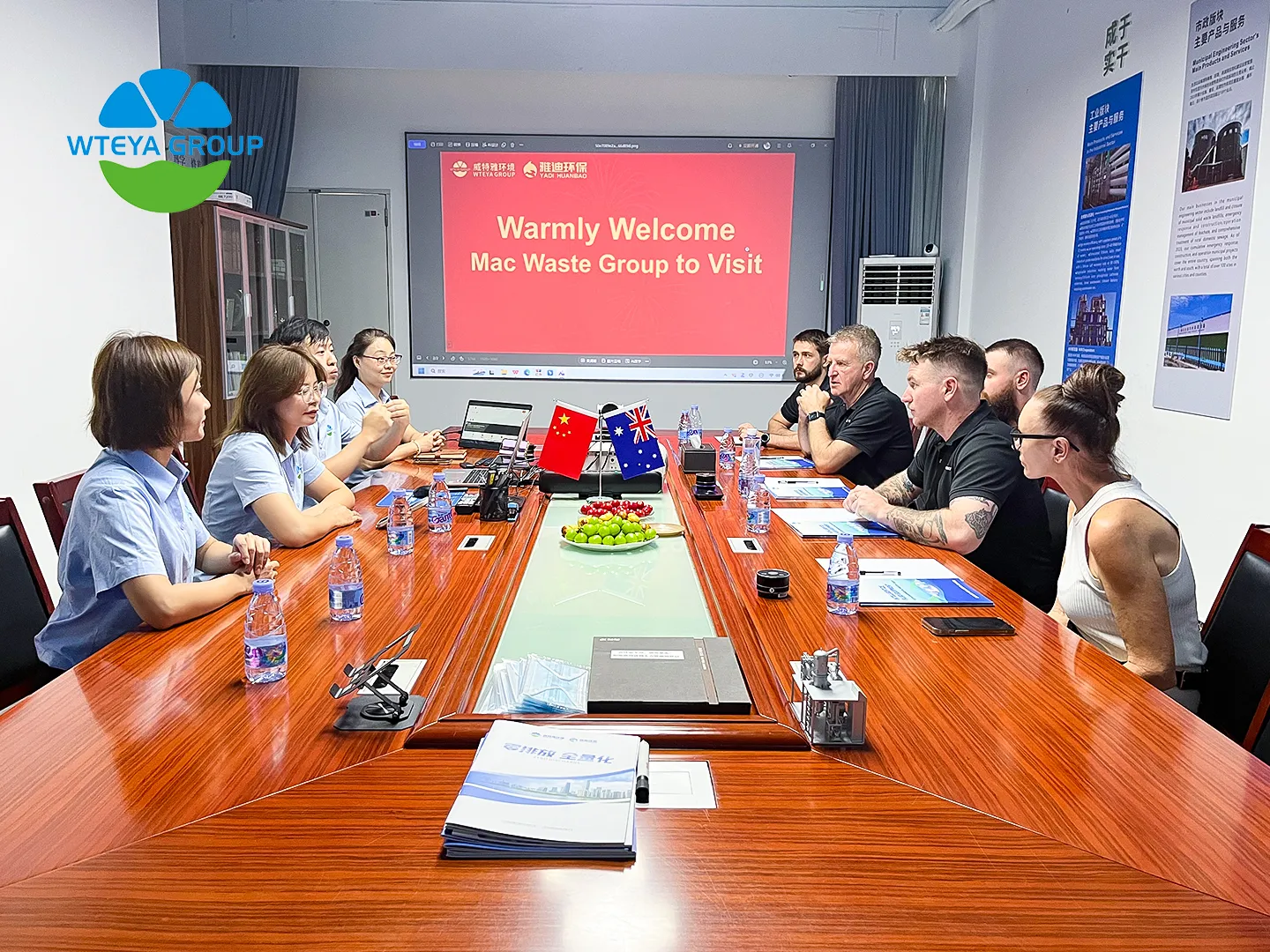
WTEYA welcomed four representatives from Mac Waste Group, an Australian septic and liquid waste specialist, to our manufacturing base this week. The delegation met five members of our engineering and sales team at the front desk, where a red welcome screen reading “Warmly Welcome Mac Waste Group to Visit” framed the group photo. Their agenda was specific: they came to review wastewater treatment solutions for the liquid streams their collection trucks and treatment sites handle every day, and to see how our equipment is built before agreeing on a supply route.
Mac Waste Group works across the domestic and commercial side of liquid waste in Australia: septic tank servicing, grease trap and interceptor cleaning, portable toilet servicing, and the treatment and disposal of the material collected. That business model puts unusual pressure on equipment, because the feed changes from load to load and the plant has to keep running through it.
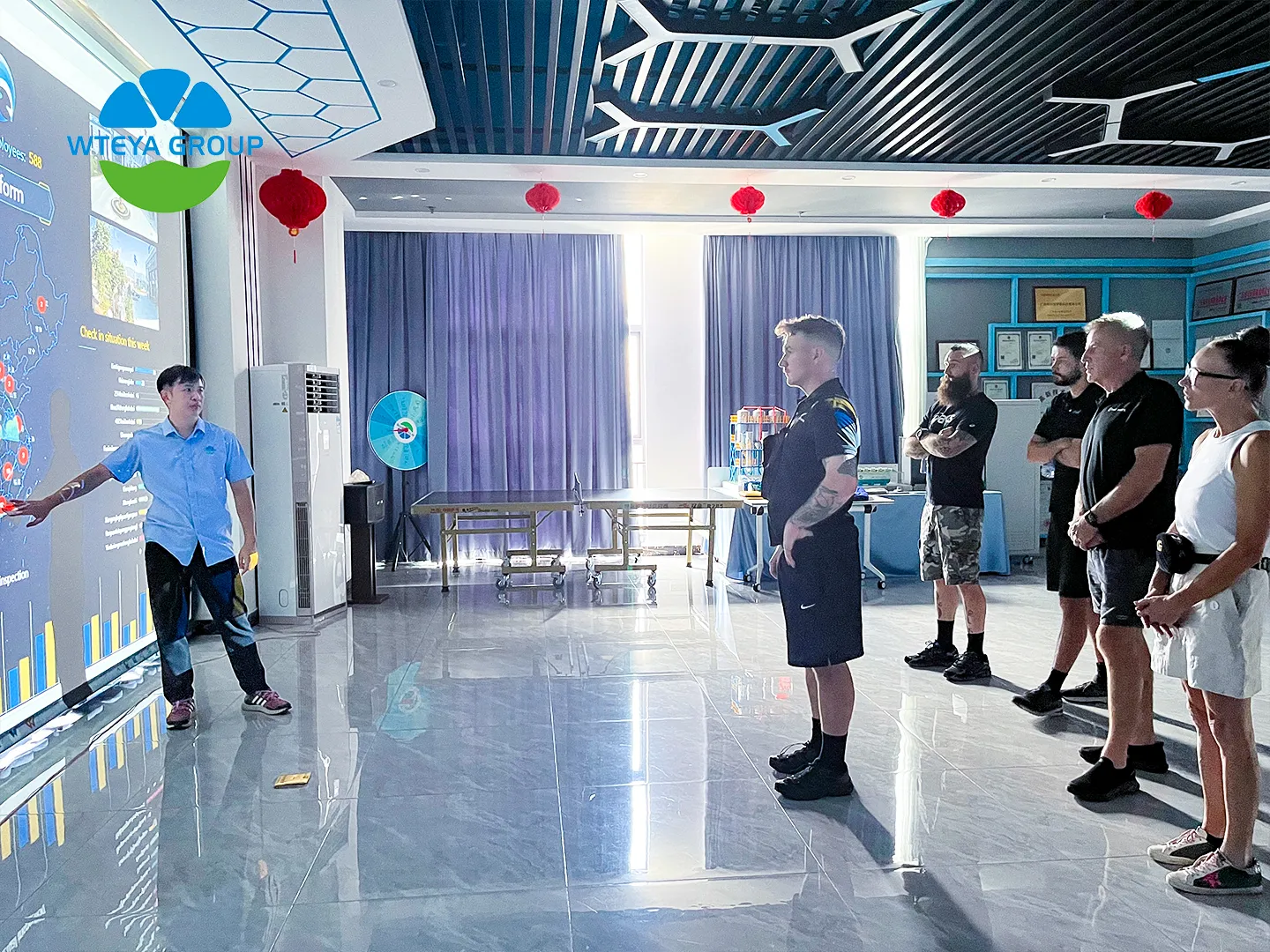
Why an Australian Liquid Waste Specialist Came to WTEYA
Liquid waste contractors rarely buy equipment as a catalogue item. The composition of what arrives at their yard — septage, grease trap waste, holding tank sludge, wash-down water — decides the process, and the process decides the equipment. That is why the Australian team asked for a factory visit rather than a quotation by email.
In the opening session the visitors set out the constraints they work under: variable chemical oxygen demand, high suspended solids in some loads, salt content that rises when industrial clients share the same collection route, and discharge limits enforced by local water authorities. They also described the commercial reality of their market — collection windows are fixed, so any treatment step that stops the plant becomes a service failure, not just a maintenance cost.
Our engineers responded with the range of treatment configurations we build for exactly this type of duty, and with a frank account of where each one fits and where it does not. That exchange set the tone for the rest of the day.
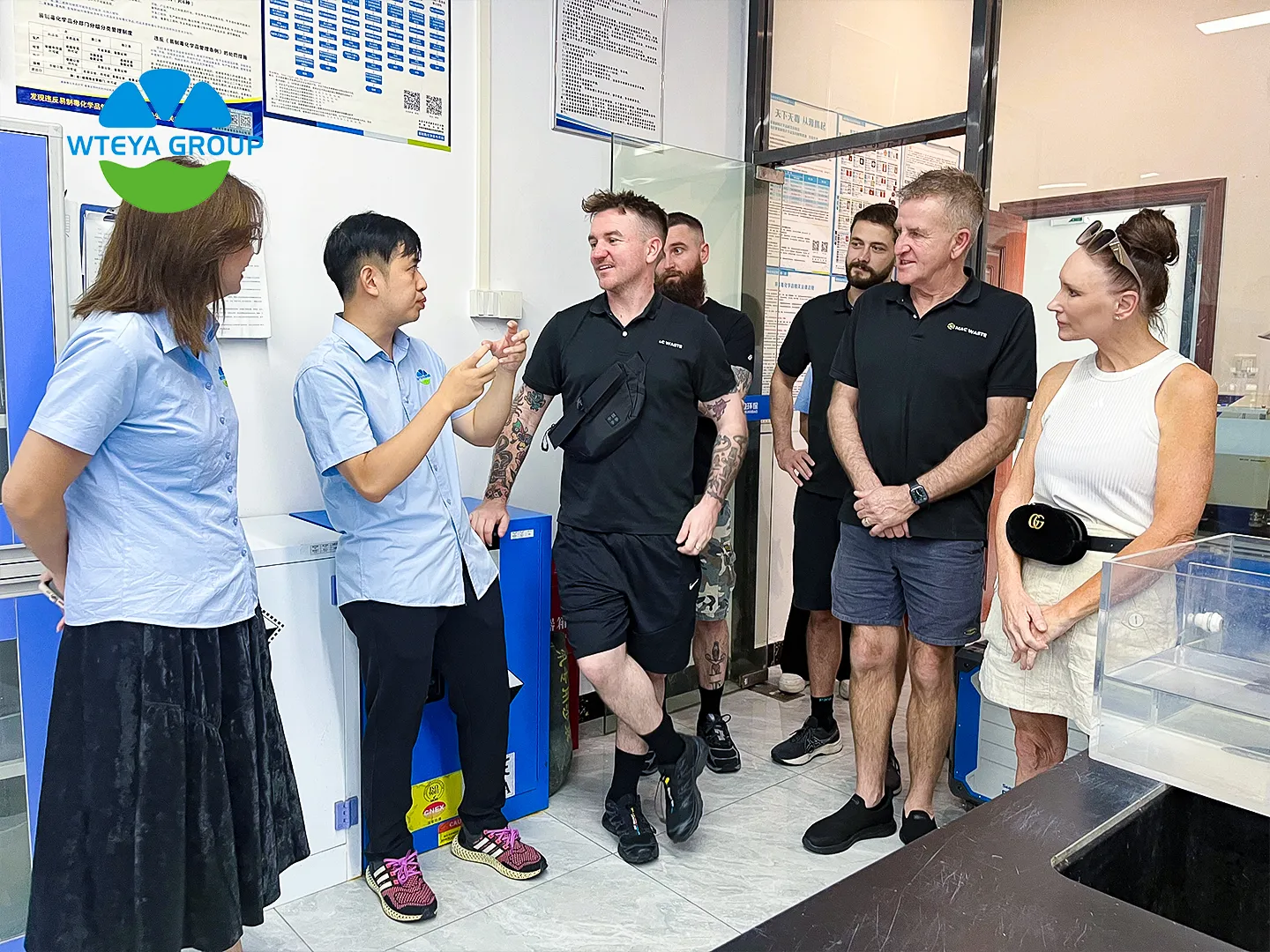
Walking the Production Line: Tanks, Skids and Test Bay
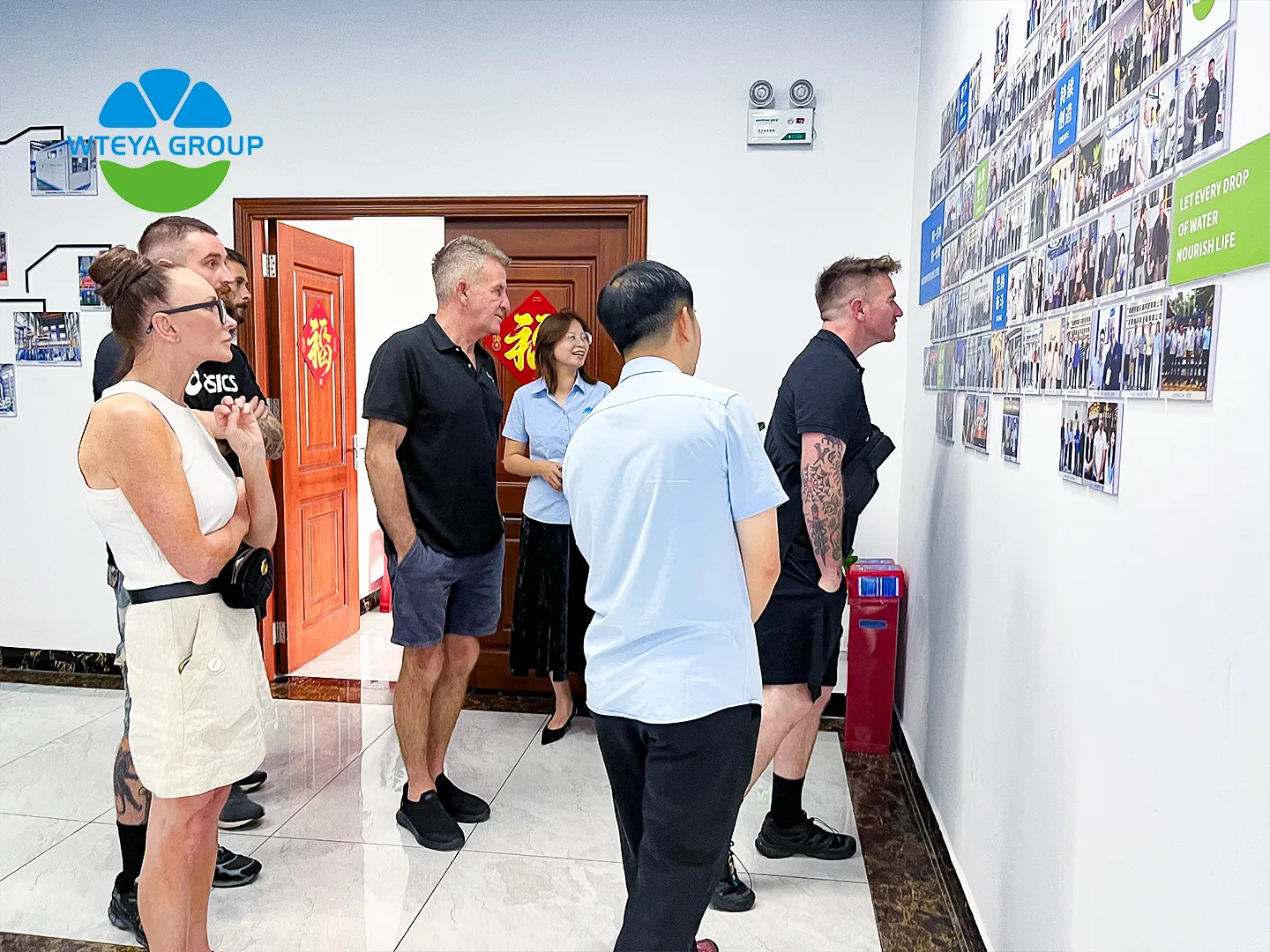
The delegation then walked the full production flow, starting with incoming plate and raw material inspection and ending at the test bay. Because our base builds both skid-mounted membrane systems and larger evaporation equipment, the visitors could compare fabrication standards side by side.
At the tank and frame lines they examined weld quality, surface preparation and the coating schedule used for wet, corrosive service. On the assembly floor they saw how pretreatment, pumps, membrane housings and control panels are integrated onto a single frame, so a system arrives as one item to connect rather than a set of parts to assemble on site.
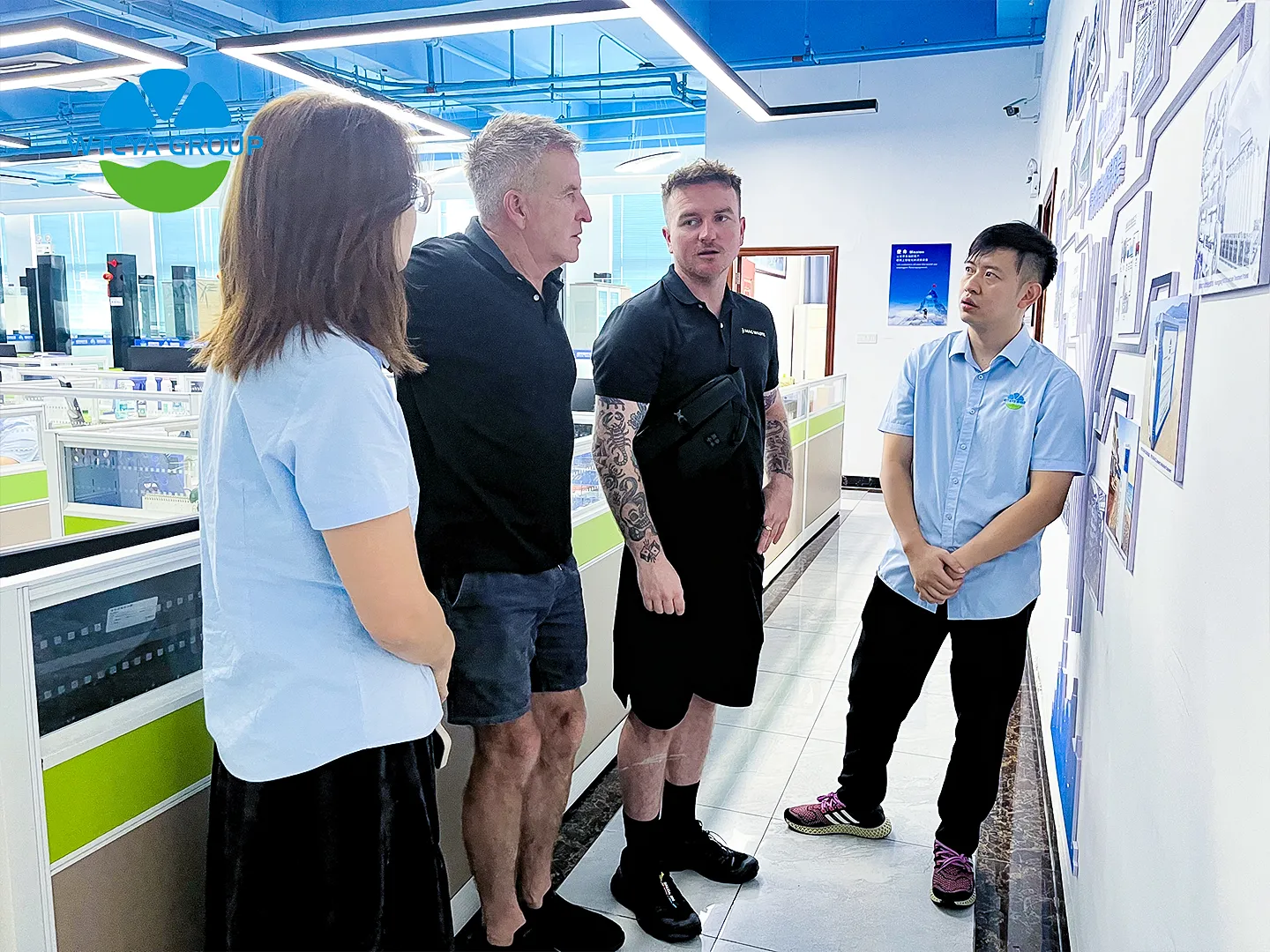
In the test bay, units are run under simulated operating conditions before dispatch: pressure and leak checks on the complete circuit, pump and instrument verification, and a functional run of the control panel. Each machine leaves with its own test record. For a contractor whose revenue depends on uptime, seeing that routine rather than reading about it was the point of the visit.
Turning Liquid Waste Streams into a Workable Process Design
The afternoon technical session was the core of the visit. Rather than proposing one machine, our team walked through how a treatment train is assembled around the waste actually received, in three decisions.
First, pretreatment. Screening, equalisation and, where fats and oils are present, separation or dissolved air flotation. This stage protects everything downstream: membranes and evaporator heat exchangers are expensive to clean and easy to foul if solids and grease arrive unchecked.
Second, concentration. For streams with high salt, high chemical oxygen demand, or a large water fraction that has to be removed before disposal, evaporation and concentration cut the volume that must be tankered away. Mechanical vapour recompression is the usual choice where power is available and the stream is suitable, because it recovers most of the latent heat inside the unit.
Third, polishing. Membrane stages — ultrafiltration followed by reverse osmosis where the target is reuse rather than discharge — take the clarified stream to the quality the local authority or the customer’s own reuse plan requires. Permeate can return to wash-down, truck rinsing or irrigation, which changes the economics of the whole site.
The Australian team tested that logic against several of their real loads, including one with a salt spike from an industrial client. The useful part of the discussion was not a headline capacity figure but the boundaries: which streams suit evaporation, which are better served by membrane concentration, and where a combination is the only configuration that holds up.
What Comes Next for the Australian Market
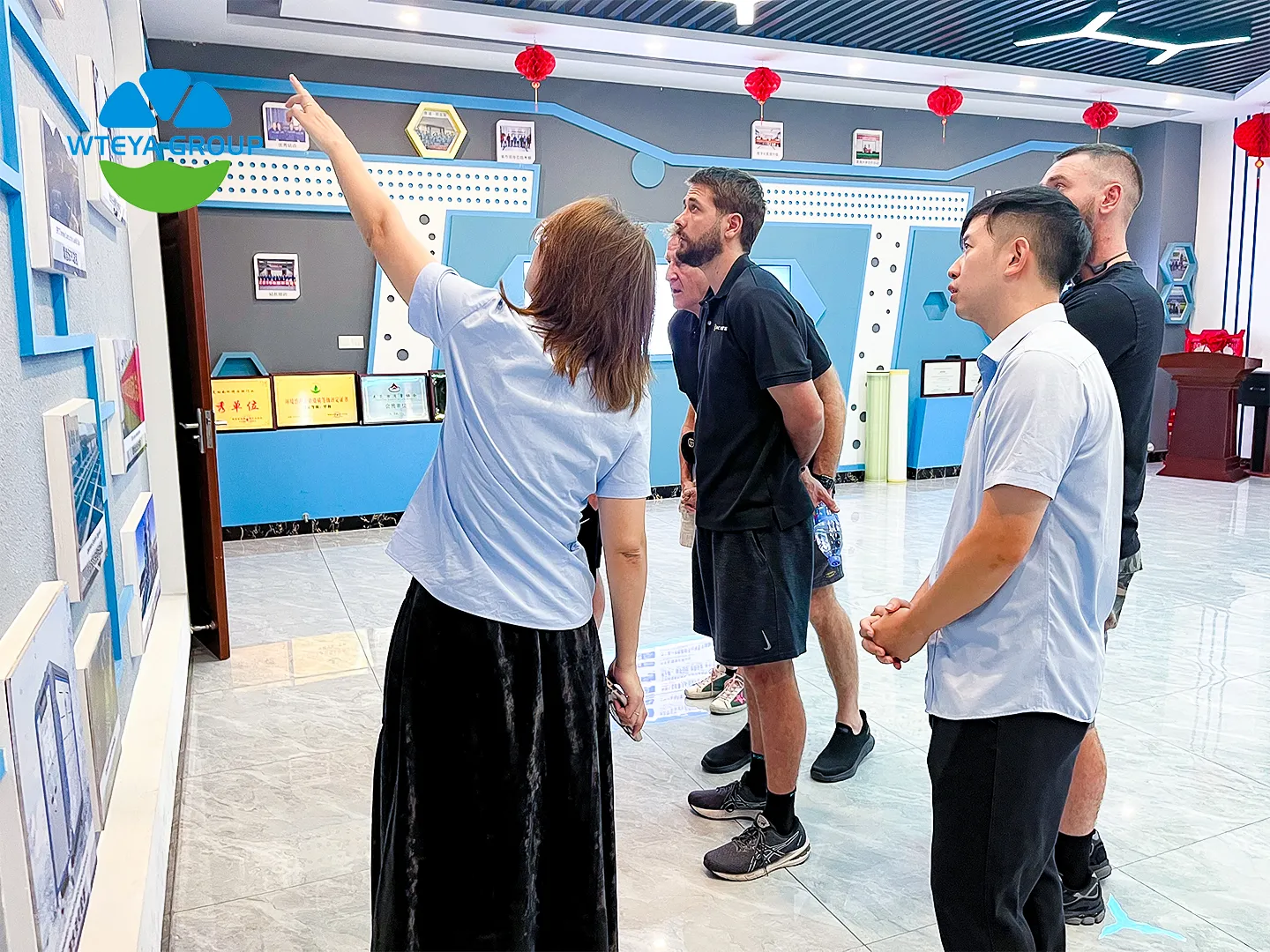
The visit closed with a practical conversation about the route to market. Mac Waste Group knows its client base and the regulatory environment; WTEYA builds the equipment and supports it from the factory. Both sides agreed to continue with project-specific data — sample analysis, daily volume and discharge limits — so that a configuration can be priced against real conditions rather than assumptions.
Service was discussed as seriously as supply. Remote diagnostic support, spare parts availability and the documentation package that local technicians need for installation and maintenance were all on the table, because equipment that cannot be serviced quickly in regional Australia is not equipment a contractor can rely on.
We thank the Mac Waste Group team for making the trip and for the openness of the technical discussion. Visits like this are how specifications get decided properly: at the factory, with the people who will run the plant in the room.