







Winterizing a Portable Desalination Unit: Storage Guide
Winterizing a Portable Desalination Unit: Storage Guide
A portable desalination unit spends most of its life idle. On a yacht it may run for an hour a day in summer and then sit untouched from October to April; at a remote camp it may be standby equipment that is tested twice a year. What happens during that idle period decides whether the unit starts again at its rated output or begins the next season with a membrane that has to be replaced.
The failure modes are unglamorous: a split housing from a hard frost, a biofilm that grew quietly in stagnant feed water, or a polyamide element that dried out and lost its salt rejection permanently. This guide sets out what to do for a two-week pause, for a full winter layup, and for the restart that follows.
Why a Stored Water Maker Fails
Four mechanisms account for most storage damage, and each has a different remedy.
Freezing. Water expands by roughly 9% when it turns to ice. Pressure vessels, pump heads, pressure gauges and fittings are not designed for that expansion, and a single hard frost can crack a housing that has performed perfectly for years.
Biological growth. Feed water left in the element and pipework is a nutrient broth. A biofilm can establish itself within a few weeks, and it produces the same symptoms as operational fouling: falling flow, rising differential pressure and a permeate that smells when the unit restarts.
Membrane dry-out. Polyamide elements must remain wet. Once the membrane dries, the active layer collapses and the loss of flux and salt rejection is not recoverable by cleaning. A unit stored dry is a unit waiting for a new element.
Chemical attack. Chlorine or a general-purpose biocide left in contact with a polyamide membrane will oxidise it. The damage shows up as rising salt passage weeks later, long after the cause has been forgotten.
Short Layup: Two Weeks to Two Months
For a pause of a few weeks, the goal is simply to remove feed water and keep the element wet and clean.
Flush with permeate. Run the unit on product water for 10–15 minutes so that seawater and concentrated brine are displaced from the element and the pipework. Permeate is low in dissolved solids and will not leave salt crystals behind as it stands.
Preserve with sodium metabisulfite. Circulate a 1% sodium metabisulfite solution through the element until it is completely full, then close the valves to exclude air. The sulfite consumes dissolved oxygen and suppresses biological growth; it is compatible with polyamide at the concentrations used for storage.
Keep it cool and closed. Store the unit out of direct sunlight, above freezing and below about 25 °C where possible. Label the date of preservation on the housing, and if the layup extends beyond a month, circulate or refresh the solution for 30–60 minutes to keep the sulfite active.
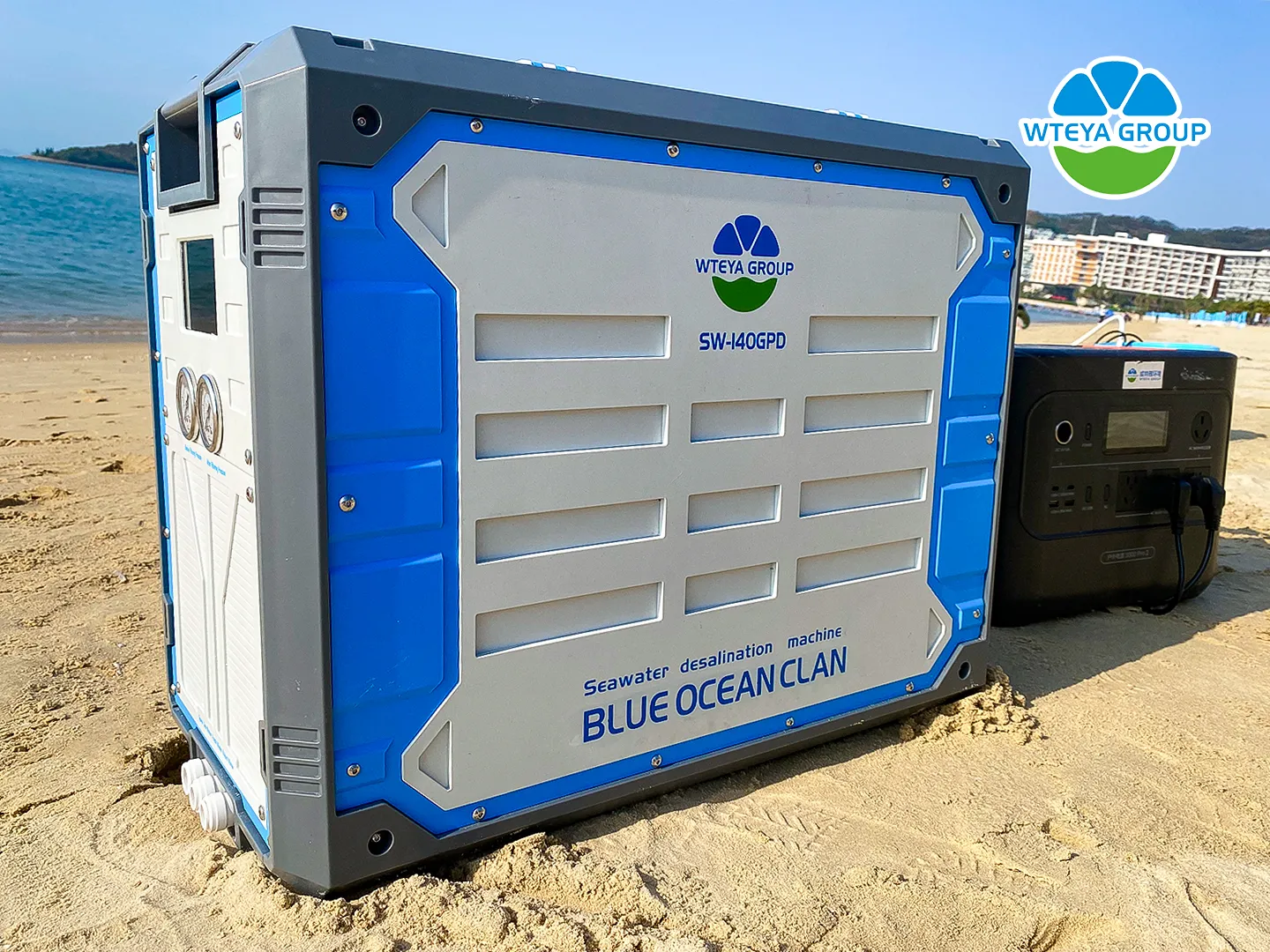
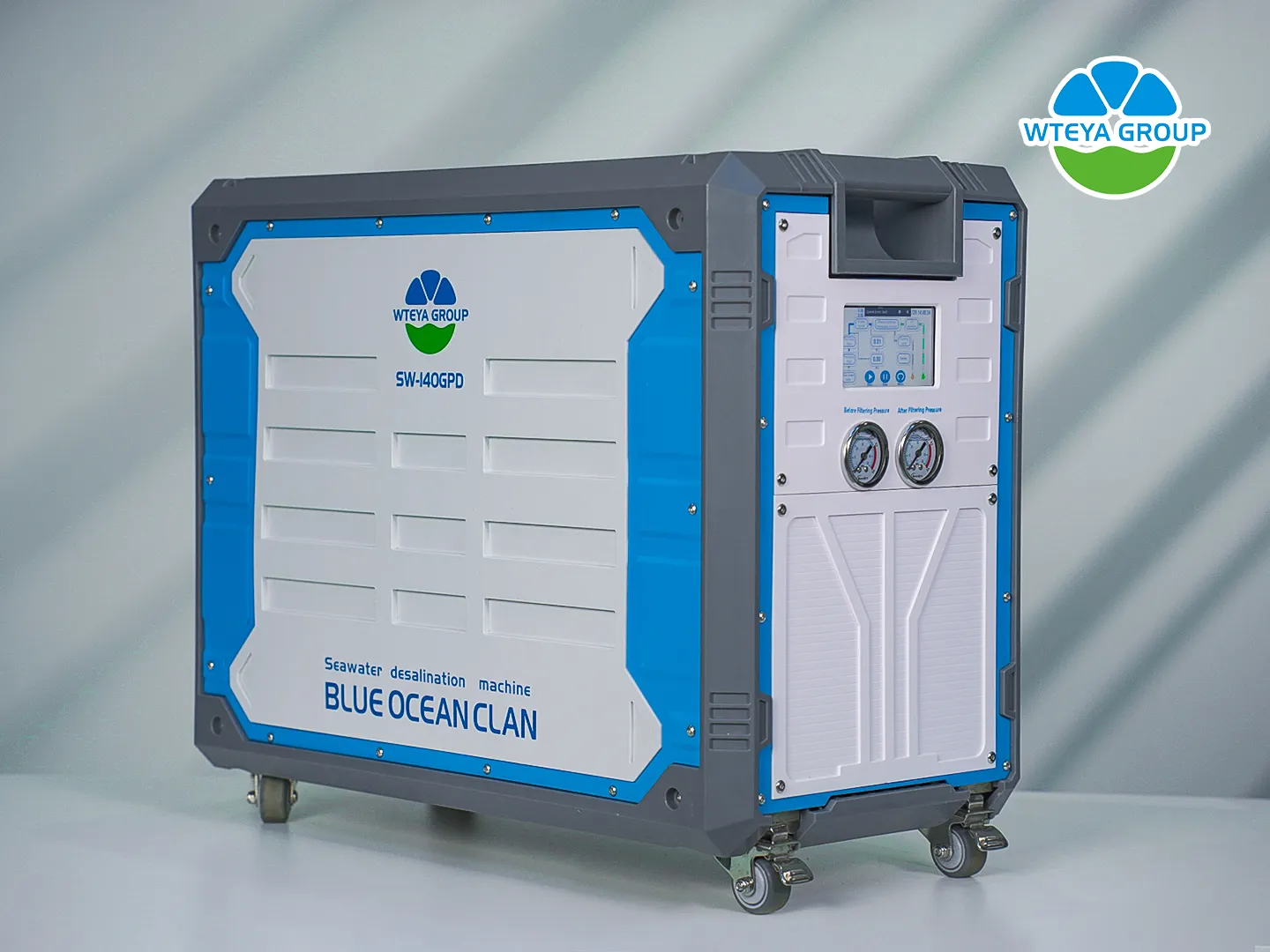
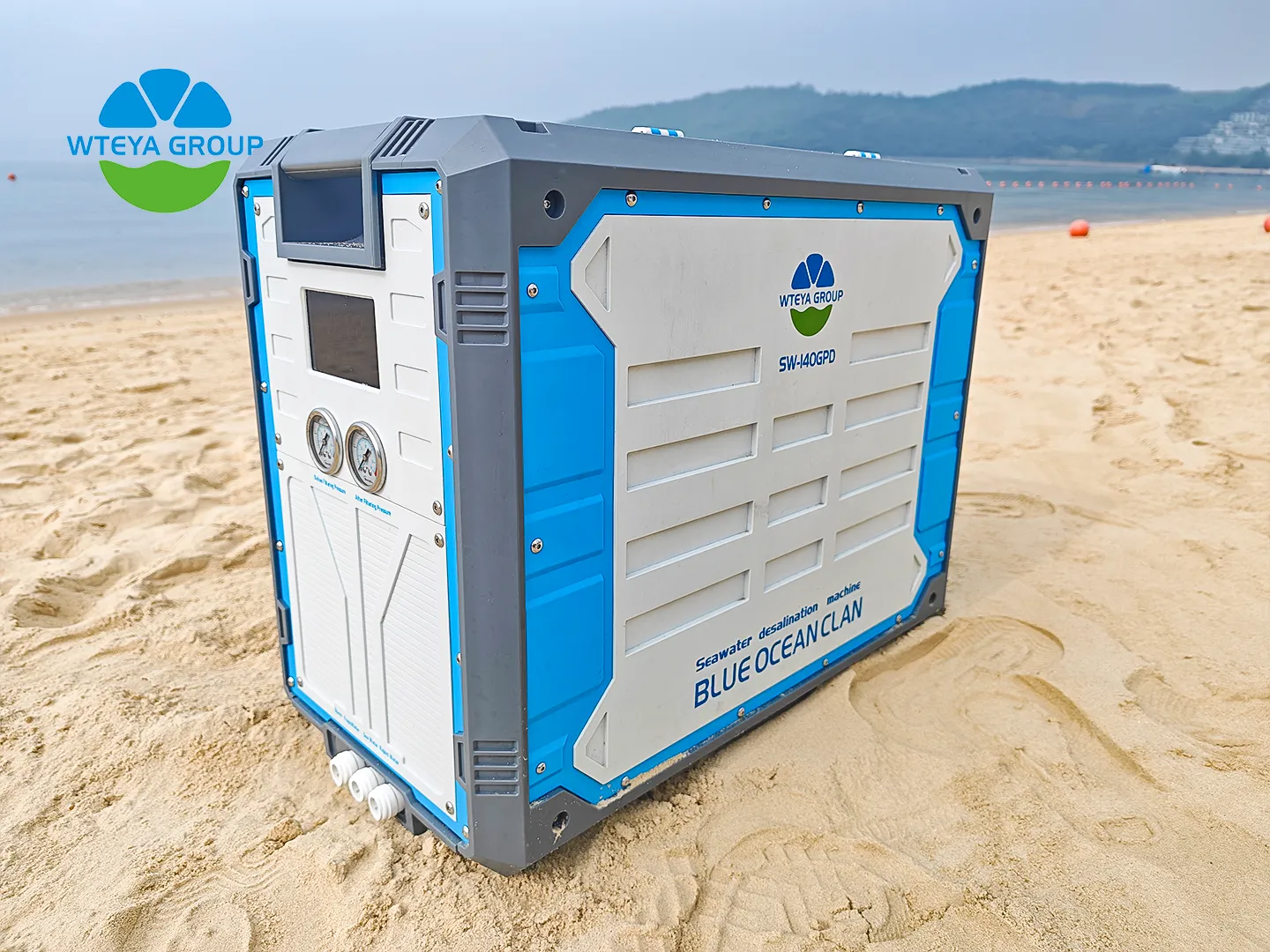
A compact unit such as our portable desalination machine is usually preserved by filling the element and the high-pressure line, then isolating both ends with the valves supplied for that purpose.
Stationary skid-mounted installations follow the same steps at a larger scale, with more valves to line up and a longer flush; the small desalination plant is laid out so that the element and the high-pressure line can be isolated for preservation without dismantling the pipework.
Long Storage at the End of the Season
End-of-season storage deserves the extra hour of work, because a membrane that is put away clean will usually come back to its baseline in spring.
Clean before you preserve. If the unit has been running on silty or biologically active water, perform a clean-in-place first: alkaline wash for organic and biological material, acid wash for scale, then a permeate flush. Preserving a fouled element simply gives the deposit several months to compact.
Fill completely and exclude air. Air pockets are where corrosion and drying begin. Fill the element, the membrane housing and the high-pressure line until preservative appears at the outlet, then close the valves in the order that leaves the element full.
Store within a defined envelope. Keep the unit between about 5 °C and 25 °C, protected from frost and sunlight. Where the storage period may exceed six months, refresh the preservative solution monthly and record each refresh; element makers generally treat twelve months as the practical limit before replacement should be considered.
Remove and discard the cartridge filter. A used prefilter holds organic load and is a poor thing to leave in the circuit. Fit a new one at commissioning rather than at layup.
Freeze Protection When the Site Cannot Stay Warm
The simplest protection is a heated space, and it is worth arranging before the first frost rather than after. Where that is impossible, the options narrow quickly.
Drain the machine, not the membrane. Drain the high-pressure pump, the pipework, the gauge lines and any low points, but keep the element itself wet and preserved. Blowing air through a polyamide element to dry it will cost more than the freeze risk you are trying to manage.
Do not use antifreeze in the membrane circuit. Glycol mixtures contaminate the element and are difficult to remove completely. Drain the water instead, and use antifreeze only in the engine or cooling circuit if the installation shares one.
Protect seals and O-rings. Lubricate O-rings with a silicone grease approved for potable-water components before reassembly. A dry O-ring that has sat compressed for months is a common source of leaks at spring commissioning.
Restart Procedure After Storage
The restart is the only real test of how well the layup was done, so do it in a fixed order and record the numbers.
- Drain the preservative solution completely and dispose of it according to local rules; sulfite solutions consume oxygen and should not be discharged to sensitive water without consideration.
- Flush with feed water at low pressure for 2–5 minutes to waste, then discard permeate for 10–15 minutes before the product is used.
- Check the sulfite residual with a test strip; a positive residual confirms the element stayed preserved rather than dried.
- Inspect O-rings, gauge lines and fittings, then start at low pressure and ramp to operating pressure over 10–15 minutes.
- Record permeate flow, operating pressure and product conductivity against the commissioning baseline. A return to within a few percent means the layup worked; a persistent loss of rejection after 30 minutes suggests the element dried or was chemically damaged.
Six Mistakes That Cost a Membrane
- Leaving feed water in the element over winter, which invites both frost damage and biofilm.
- Storing with chlorine or a general biocide in contact with a polyamide element.
- Using glycol antifreeze in the membrane circuit instead of draining the pipework.
- Storing the unit in sunlight or in an unheated shed that drops below freezing.
- Preserving a fouled element, then discovering the deposit has compacted in spring.
- Restarting without flushing, so preservative or stagnant water reaches the product tank.
🤝 Prepare Now for Next Season
Send us your unit model, the water it runs on and the storage conditions at your site, and our engineers will return a layup procedure matched to your element and your climate — including the preservative volume and the flush times for your configuration.
Become a WTEYA authorized dealer. Exclusive territories, competitive pricing and full factory support — including technical training, sizing tools and marketing material — for partners serving marine, island and remote-site water supply.
📲 WhatsApp: +86-1802 5185 143
📧 Email: sales@wteya.com
🌐 Website: www.wteyaa.com
Previous: RO Fouling and CIP in Desalination Plants: A Field Guide
Next: No More