






Solar Seawater Desalination: Off-Grid Fresh Water for Remote Areas
Solar Seawater Desalination: Off-Grid Fresh Water for Remote Areas
Water scarcity affects more than two billion people worldwide, and for communities in remote islands, arid coastlines, and off-grid installations, access to clean fresh water remains an uphill battle. Traditional desalination systems depend on grid electricity, making them impractical in areas where power infrastructure is absent or unreliable. Solar seawater desalination changes that equation entirely by turning sunlight and seawater into a reliable, sustainable source of drinking water.
Why Remote Areas Need Solar Desalination
Island communities, offshore platforms, and coastal research stations often face a brutal choice: ship in expensive freshwater supplies or struggle with contaminated local sources. The logistics of transporting water by boat or truck can cost several dollars per liter, making it unaffordable for daily use. In many cases, groundwater wells yield brackish or saline water that is unsafe to drink without treatment. Solar desalination solves both problems simultaneously by producing fresh water on-site, powered by an energy source that is universally available in coastal regions.
How Solar Desalination Systems Work
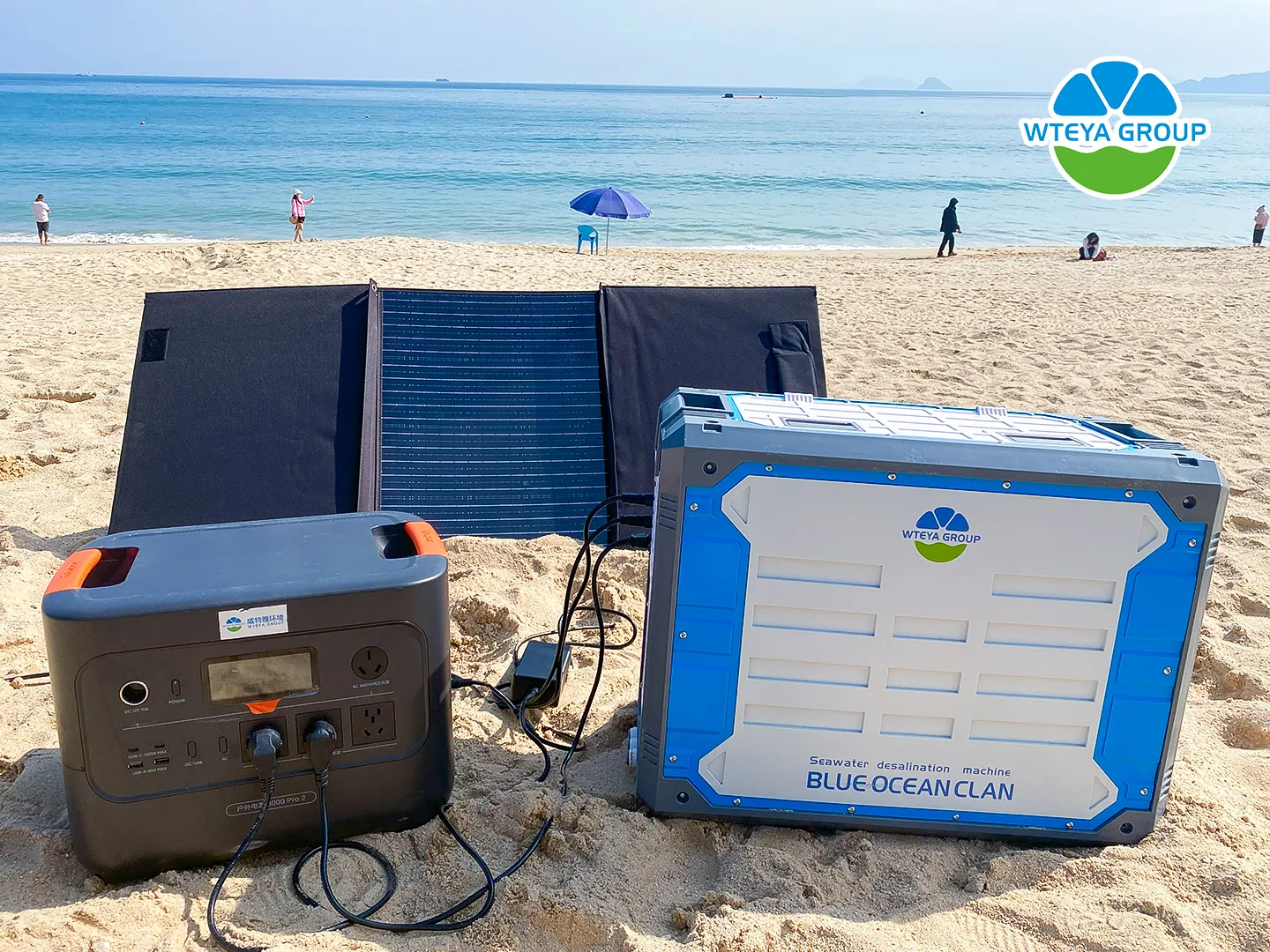
Solar seawater desalination combines reverse osmosis (RO) technology with photovoltaic panels to create a self-sufficient water production unit. Sunlight generates electricity through solar panels, which powers a high-pressure pump that pushes seawater through a semi-permeable membrane. The membrane separates salts and minerals, producing clean, potable water on one side and a small volume of concentrated brine on the other. Advanced models integrate battery storage to maintain operation during nighttime or cloudy periods, ensuring continuous water supply regardless of weather conditions.
Key Advantages of Solar Desalination
Off-grid operation stands as the most significant benefit. Solar desalination units require no connection to electrical grids, making them ideal for remote installations where infrastructure does not exist. Energy costs drop to zero after installation since sunlight is free and inexhaustible, delivering long-term savings compared to diesel generators or water trucking services. The environmental impact is minimal, with zero greenhouse gas emissions during operation and no chemical additives required in the treatment process.
Where Solar Desalination Makes a Difference
Remote island communities use solar desalination to achieve water independence without relying on expensive imported supplies. Marine vessels, from sailboats to ocean research platforms, install compact solar units to extend voyages without worrying about freshwater rationing. Emergency response teams deploy rapid solar desalination kits to disaster zones where existing water infrastructure has been destroyed. Agricultural operations in coastal arid regions utilize solar-powered systems to irrigate crops with desalinated seawater, transforming previously unproductive land into viable farmland.
As solar technology continues to fall in cost and improve in efficiency, solar seawater desalination is shifting from a niche solution to a mainstream water supply strategy. For any off-grid or remote application where clean water is needed, it offers a practical, sustainable, and increasingly affordable answer.
📲 WhatsApp: +86-1800 2840 855
📧 Email: sales@wteya.com
🌐 Website: www.wteyaa.com