







How Long Does It Take to Build a Seawater Desalination Plant?
How Long Does It Take to Build a Seawater Desalination Plant?
A seawater desalination plant takes one to three months from contract signature to first potable water, with 30 to 90 days covering design confirmation, equipment manufacture, transport and on-site commissioning. A 5 t/h system usually needs 30 to 45 days; a 10 t/h system needs 45 to 60 days; a containerized unit that is in stock can be producing water within two to four weeks.
That range surprises buyers in both directions. Some expect a year of civil works, others expect a skid to arrive in a fortnight. The number depends far less on the membrane array than on whether the plant is a standard factory-built unit or a customized system, whether stock is available, and whether the site foundation and seawater intake are ready before the equipment lands.
⚙️ The Four Phases, End to End
A desalination plant is delivered in four phases, and only one of them is manufacturing. Treating the schedule as a single delivery date is what causes most of the friction in a project.
- Design and confirmation, 5 to 10 days. Site survey, feed water analysis, process and layout drawings, quotation sign-off. Feed water quality is the item that most often stalls this phase: a seawater analysis that arrives late changes the pretreatment scope and therefore the price.
- Equipment manufacture, 20 to 45 days. A 5 t/h (about 120 m³/d) system is typically built in 20 to 30 days; a 10 t/h (about 240 m³/d) system in 30 to 45 days. Standard models from stock collapse this phase to days rather than weeks.
- Transport, 3 to 15 days. Skid-mounted and containerized units travel by road in 3 to 7 days domestically. Container shipments depend on the route and the sailing schedule, and can add two weeks on a long lane.
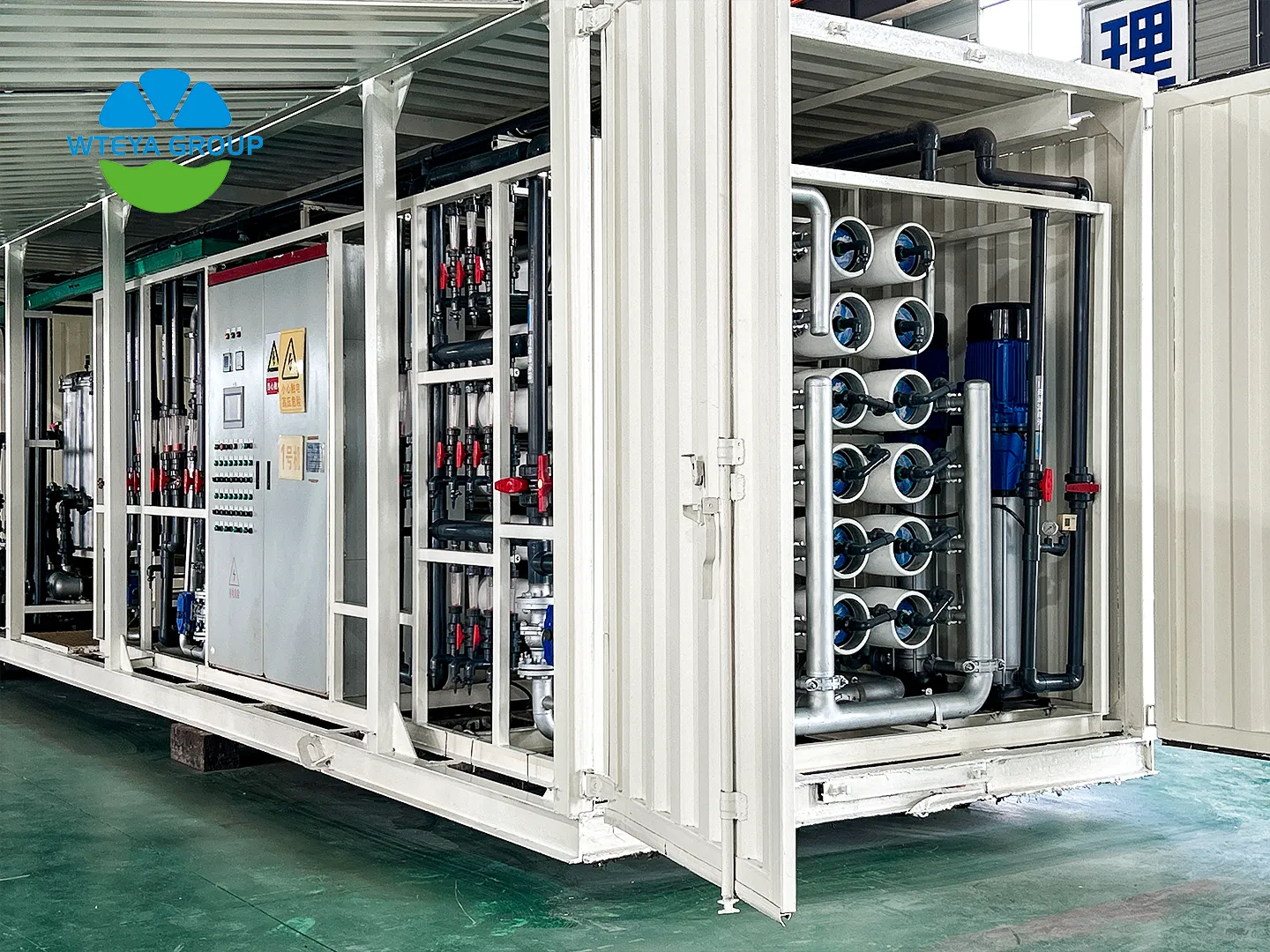
- Installation and commissioning, 3 to 15 days. A containerized plant is lifted into place and connected in 3 to 7 days; a skid system needs piping tie-ins and takes 7 to 15 days. Commissioning includes flushing, pressure testing, water quality verification and operator training.
📅 Typical Timeline by System Size
The table below is the schedule we quote most often, assuming a standard configuration and a site that is ready when the equipment arrives.
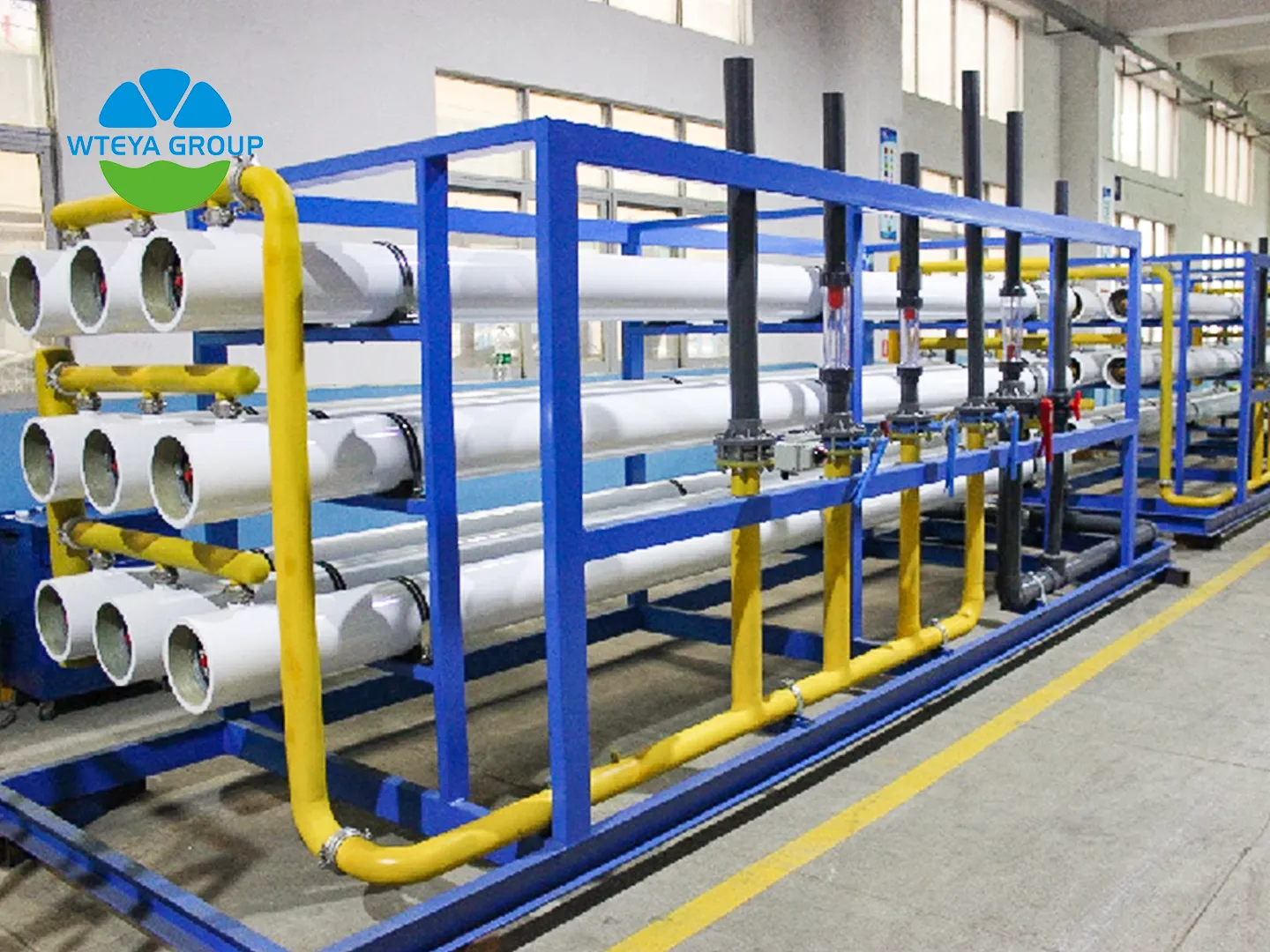
- 5 t/h (120 m³/d), skid-mounted: about 30 to 45 days from contract to water, of which 20 to 30 days is manufacture.
- 10 t/h (240 m³/d), skid-mounted: about 45 to 60 days, of which 30 to 45 days is manufacture.
- Containerized plant, standard model in stock: 2 to 4 weeks, because manufacture is replaced by preparation and testing before dispatch.
- Customized plant with enhanced pretreatment: add 10 to 20 days for engineering and for the additional treatment stage, plus the delivery time of long-lead components.
🚢 Five Factors That Move the Date
Once the base schedule is fixed, five variables decide whether the plant arrives early or late.
- Stock availability. A standard model on the shelf is the single largest saving; the same unit built to order adds four to six weeks.
- System format. A containerized unit is assembled and tested in the factory, so on-site work shrinks to lifting, connection and commissioning. A skid system requires more site piping.
- Degree of customization. High-turbidity or algal-risk seawater may need dissolved air flotation, media filtration or ultrafiltration ahead of the RO stage, each of which adds both engineering and manufacturing time.
- Site readiness. Foundation, seawater intake, brine outfall and power supply are civil and electrical works outside the equipment package. If they are not ready, the plant sits in its crate.
- Season and logistics. Typhoon season, holiday shutdowns and port congestion all show up as transport delay rather than manufacturing delay, which makes them easy to overlook at the planning stage.
🏗️ Site Work That Should Run in Parallel
The realistic way to compress a desalination project is to run civil works alongside equipment manufacture rather than after it. Four work packages can proceed while the plant is being built: the concrete foundation or container pad, the seawater intake and screening, the brine discharge line and outfall, and the power supply with its protection gear.
On a well-run project these are finished by the time the equipment arrives, and installation becomes a connection and commissioning exercise measured in days. On a poorly sequenced project the same equipment waits weeks for a foundation, and the total schedule doubles without any supplier being at fault.
For plants that must produce water quickly, a containerized seawater treatment plant is the practical answer: factory assembly, factory testing, and a site programme dominated by lifting and tie-in rather than construction.
⏱️ How to Shorten the Schedule
- Complete the site foundation and intake works before the equipment is dispatched, not after.
- Choose a standard model and a containerized format so that the factory does most of the work.
- Have the three-phase power supply and the operating team ready, and combine commissioning with operator training.
- Select a manufacturer with stock and a stable supply chain rather than the lowest quotation with a vague delivery date.
- Fix milestone dates in the contract — design freeze, factory acceptance test, shipment, water-on commissioning — so that delay has a defined owner.
🔧 What Happens During Commissioning
Commissioning is short but it is where the schedule is either confirmed or lost. The sequence is a flush of the pretreatment and RO trains, a pressure test of the high-pressure section, a first run to drain while conductivity stabilises, then a run to the product tank with the water analysed against the contract specification. Operators are trained on the same run, which is why we schedule training into the commissioning window rather than after it.
❓ Related FAQs
- How Much Water Does a Small Desalination Plant Produce Per Day?
- How Much Electricity Does a Small Desalination Plant Use?
- How to Install a Portable Seawater Desalination Machine?
- How to Choose a Portable Seawater Desalination Machine
Become a WTEYA authorized dealer for desalination equipment. Exclusive territories, competitive pricing and full factory support, including training for your service team and help with project scheduling from quotation to commissioning.
📲 WhatsApp: +86-1802 5185 143
📧 Email: sales@wteya.com
🌐 Website: www.wteyaa.com
Previous: How Much Water Does a Small Desalination Plant Produce Per Day?
Next: No More