







Can a Portable Desalination Machine Be Used for Camping?
Can a Portable Desalination Machine Be Used for Camping?
Yes — a portable desalination machine is a practical camping tool wherever you have salt or brackish water and a power source. Island camps, coastal sites, boat-based trips and emergency camps all suit it. The two conditions that decide everything are water quality at the intake and how you will power the unit. Get those right and the machine replaces the heavy water jugs in your vehicle.
🌊 Where a Portable Desalination Machine Works — and Where It Does Not
Any campsite with access to seawater or brackish water is a candidate. On the coast, the intake simply goes into the sea or an estuary; the machine removes dissolved salts and produces drinking water at the camp. The same applies to island camping, diving bases and floating camps.
Inland desert camping is different. A desalination machine cannot create water from dry ground — it only treats water that already contains salt. It is useful only where there is a salt lake, saline well or brackish groundwater. If your campsite has no water source at all, carry fresh water instead or add a handheld emergency desalinator as a backup for small volumes.
Feed water should be within TDS ≤35,000 ppm and reasonably clear, with turbidity around ≤1 NTU after prefiltration. Sandy surf, harbour water with heavy oil sheen, and stagnant pools with visible debris all need a prefilter and a careful intake position before they reach the membrane.
⚡ Power Options for Off-Grid Camping
Power is the limiting factor for most campers, and the answer depends on how long you stay. The unit draws about 1.35 kW at rated output, so a small generator or a boat's electrical system is the simplest solution for family-sized groups.
- Generator — a 2–3 kW petrol generator comfortably covers startup and running load; keep it downwind and away from the intake.
- Boat or vehicle power — a 220 V inverter from a suitably sized battery bank works for short daily runs, but check the continuous rating rather than the peak rating.
- Solar plus battery — a 24 V battery bank with solar panels is the quietest option for base camps. Size the array for the daily running hours you actually need, not for the panel's marketing wattage.
Run the machine during the day when solar input is highest, and store treated water in clean, food-grade containers rather than running the unit at night on battery alone.
🎒 Weight, Size and Setup
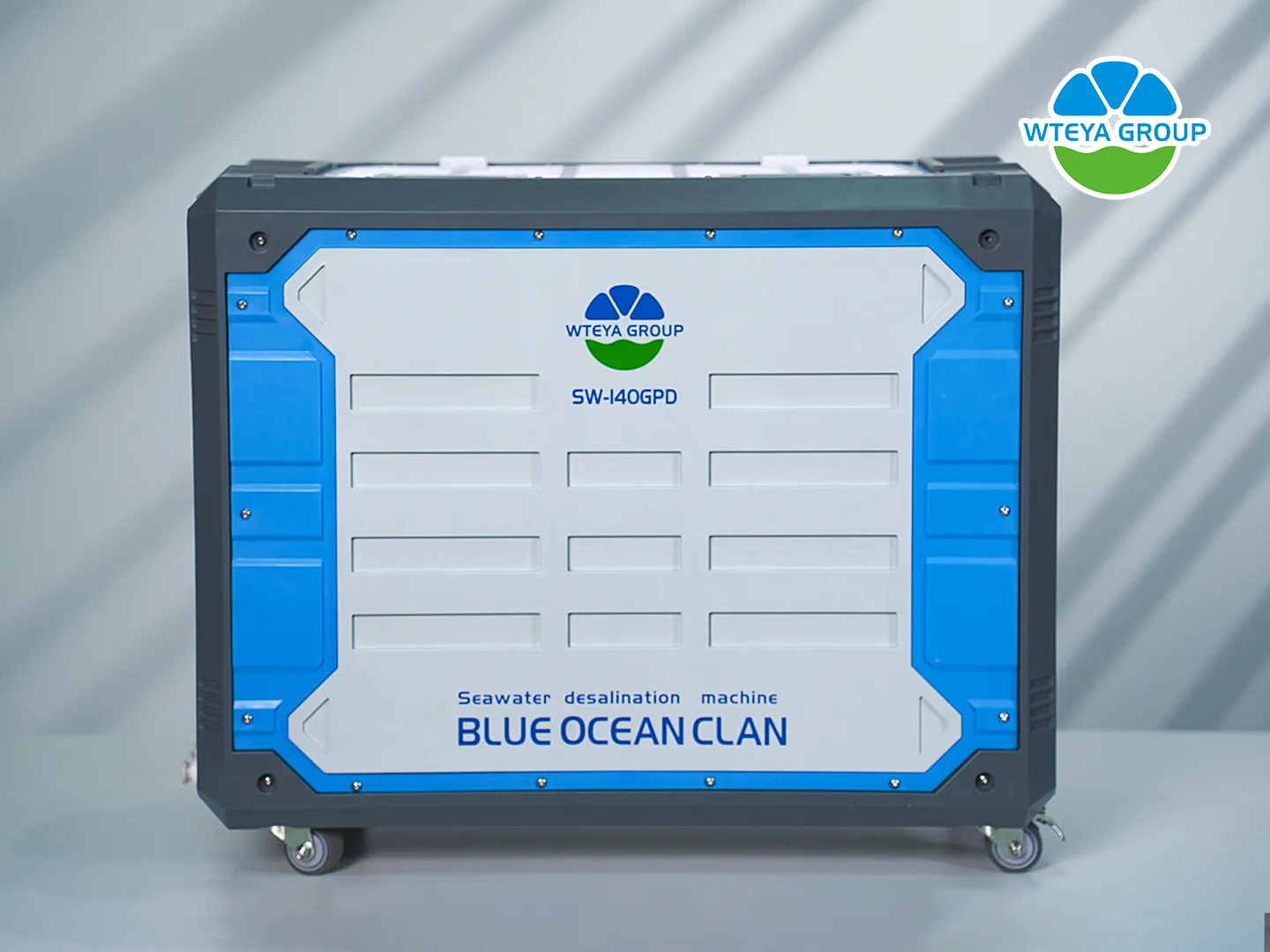
The portable unit measures 610 × 320 × 497 mm and weighs about 40 kg. Two people can lift it comfortably and one person can move it short distances. There is no civil work, no concrete pad and no permanent pipework — connect the intake hose, route the brine discharge, connect power and start.
Place the machine on level ground, keep the intake submerged but off the bottom so it does not pull sand, and run the brine line far enough from the intake that concentrated reject water is not drawn back in. A short trial run at home before the trip confirms that the unit starts, builds pressure and produces water with your planned power source.
🧰 Keeping It Running in the Field
Field maintenance is mostly about filters and shutdown protection. The first-stage filter typically needs attention every 5–60 hours depending on turbidity, and the second-stage filter every 15–30 days. Carry spare cartridges; a clogged prefilter is the most common reason a camp unit stops producing.
After the last run of a trip, flush the membrane with clean fresh water and protect it with an SMBS solution at 1–1.5% if the machine will be stored for weeks. Drain the unit, keep it out of freezing conditions, and do not leave seawater sitting in the membrane for months. A machine stored wet with seawater will lose output long before its design life.
👥 How Much Water Does a Camp Need?
Drinking demand is the first calculation: roughly 2–4 litres per person per day for drinking, before cooking and washing. A 300 GPD (about 50 LPH) unit can cover the basic drinking needs of around ten people in a single day of running, which is why it is the usual choice for group camps and small expedition teams.
For a couple or a solo camper, a smaller handheld or low-output unit is often enough and saves weight. Match the machine to the group, the length of stay and the power you can realistically carry — over-sizing wastes fuel and battery capacity, while under-sizing means rationing water on day three.
🏆 Why Choose WTEYA
WTEYA builds portable and containerised desalination systems for marine, island, emergency and outdoor use. The units are designed for real field conditions: corrosion-resistant wetted parts, simple controls, and a footprint that fits in a vehicle or on a boat deck. We supply spare filter sets and membrane protection chemicals so that a camp unit can be maintained without returning to base.
For camps that need a fixed daily output, we also offer larger trailer-mounted and containerised systems with the same membrane technology scaled up.
Related FAQs
How Much Water Does a Portable Seawater Desalination Machine Produce Per Day?
Is the Water Quality of Portable Seawater Desalination Good?
Can You Drink Water from a Portable Seawater Desalination Machine Directly?
How to Install a Portable Seawater Desalination Machine?
How to Choose a Portable Seawater Desalination Machine
How Long Does a Portable Seawater Desalination Machine Last?
📲 WhatsApp: +86-1802 5185 143
📧 Email: sales@wteya.com
🌐 Website: www.wteyaa.com
Previous: How Long Does a Portable Seawater Desalination Machine Last?
Next: No More